

When climbing the ladder to success, be sure to leave it on steady footing for the person behind you. This statement could be true in business, but this is also true in safety. To be successful when climbing a ladder for a task, it’s best to have it on steady footing. The person transcending behind you needs to know that all is well.
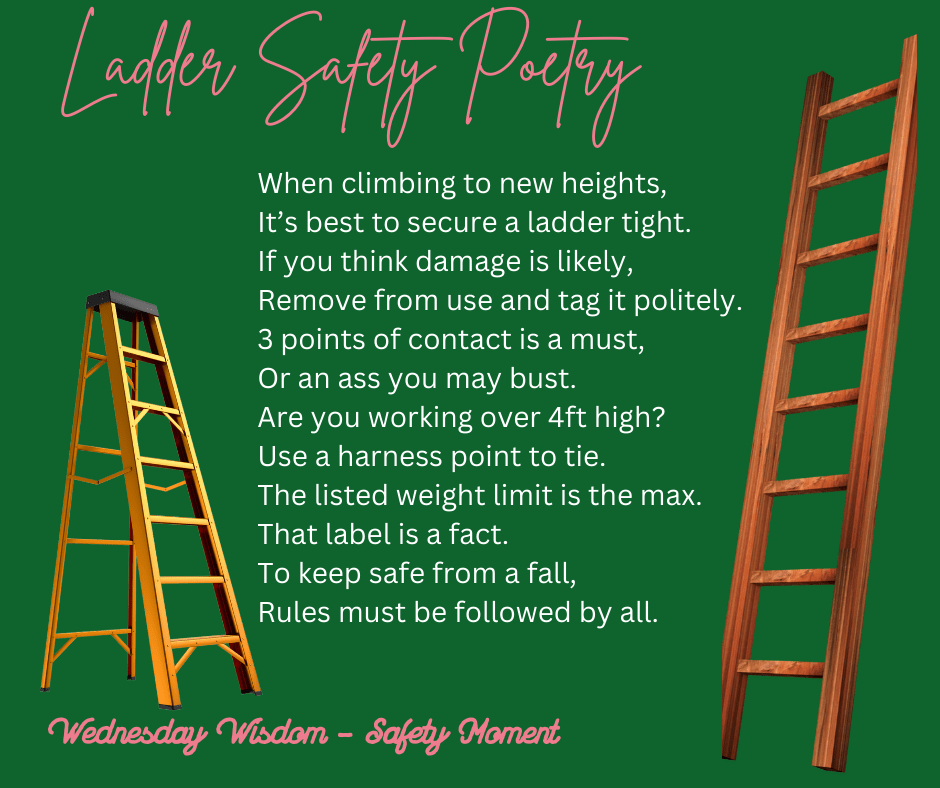
You have likely heard “three points of contact is required when ascending or descending a ladder” or “don’t lean beyond the sides of the ladder to work”. Having your back to the ladder when climbing, and straddling the top step are not acceptable either. This gibberish isn’t just something your manager or supervisor says to irritate you. It’s part of a safety protocol derived from OSHA standard 1910.23.
that one millisecond of stretching won’t help your posture
Leaning over the side of a ladder might seem like a good idea, but that one millisecond of stretching won’t help your posture. In fact, you may find yourself in a type of consequence that could cause injury. Teeter-tottering on the A-frame might feel like childhood playground fun, but when you lose your balance, that ground will not become your best friend. When we lean, our equilibrium and our natural center of gravity will shift. Quite frequently, it’s our shoulders or head that will first hit the surface below. Using the correctly rated personal fall arrest system (PFAS) can prevent you from falling beyond a few feet.
How do you know what type of ladder to use? Read the labeling. How much weight will the ladder hold? Read the labeling. How tall is the ladder? Read the labeling. Are you seeing a trend? Just like pesticides, ladders have labeling that must be followed. This set of instructions and information is designed to keep us safe. Again… THE LABEL IS THE LAW!
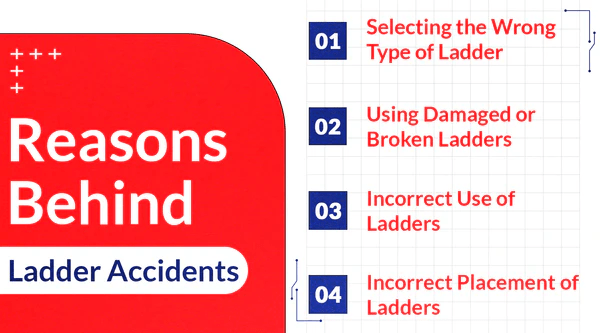
Ladder can sustain damage from misuse, impact when falling, environmental exposure, exceeding the weight limit, and not being properly stored. The weight limit to ladders is a combination of:
- Your Weight; plus
- The weight of your clothing and PPE; plus
- The weight of tools, supplies, and other items you carry; plus
- The weight of tools, supplies, and other items stored ON the ladder
When you’re unsure if damage has occurred, it is best practice to inspect ladders yourself prior to any use. Ladders that are damaged, or those that have sustained any sort of impact, should be placed out of service and tagged accordingly. If a ladder is found to have damages, destroying them is the best way to prevent future use. There is no need to risk the safety of others by letting them use an unsafe piece of equipment.
When in the course of our pest management work, we may be shortening the usable life of ladders. Pesticides, sealants, caulking, knicks with tools, and even removing and reinstalling ladders on, and in, our service vehicles cause wear and tear. Cleaning ladders can be done without harsh soaps or chemicals, and this should be a periodic task. Adequately securing them to your vehicle could prevent a traffic mishap and save you getting a fine.
Discover more from Pest Control Chatter
Subscribe to get the latest posts sent to your email.
 Pest Control Chatter